

Two anonymous online surveys ask veterans about blast, head injury and Gulf War illness, and a blood study wants 150 men. Both links checked November 2026.
Herefordshire veterans can help a PhD study of long-term health after service by filling in an anonymous online survey that takes 15 to 20 minutes. There are two to choose from, one on combat deployments and one on head injury and blast exposure. A third strand asks for 150 men to give one blood sample at Brunel University of London in Uxbridge, about 100 miles from Hereford in a straight line.
The researcher, Savannah Thompson, is a doctoral researcher at Brunel who took up the work after being medically discharged from the British Army. The research is “self-proposed and self-funded”, Thompson told us. The adverts say it has full ethical approval.
“I am now just needing to recruit people to either partake in the lab work and/or complete one (or both) of the questionnaires,” Thompson wrote. “I have attached the adverts for all three (although all three may not be relevant to your specific audience) and would really appreciate any help in circulating any of the relevant adverts wherever possible.”
Why it matters here
The appeal went to local news outlets and does not single out Herefordshire. But the blood study asks by name for veterans of the SAS, SBS, Royal Marines and Parachute Regiment, and this county has a long link with the first of those.
A written answer to Parliament in 1996 put 22 SAS at Stirling Lines in Hereford, with a plan to move the unit to the former RAF site at Credenhill. The Ministry of Defence’s Stirling Lines base now sits beside the 250-home site we reported on in September.
The surveys are wider than that. Thompson says they are open to veterans of any rank, role or service, wherever in the UK, US or Canada they live now.
The combat ill-health survey
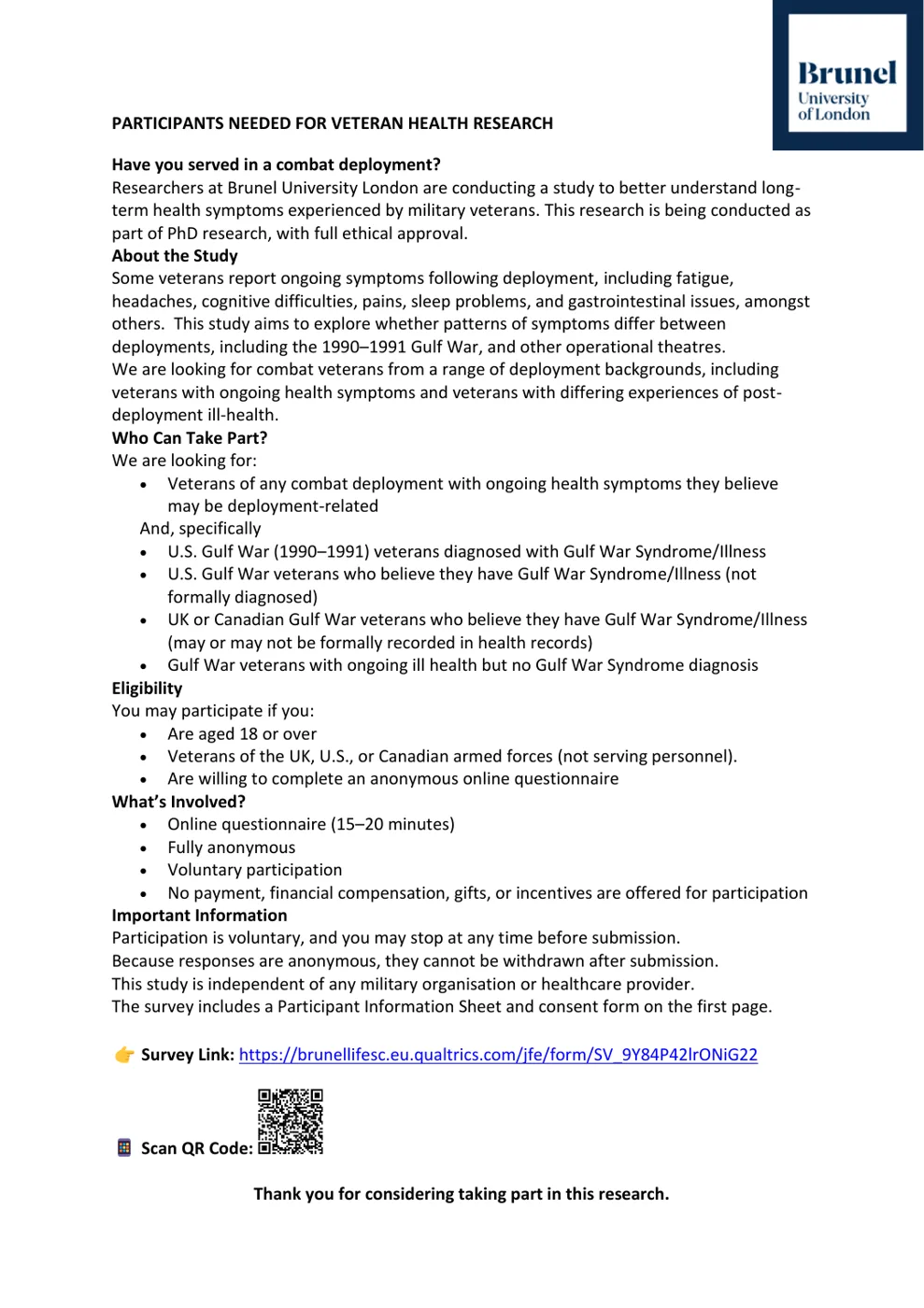
This questionnaire looks at symptoms by deployment zone. The advert says some veterans report ongoing problems, “including fatigue, headaches, cognitive difficulties, pains, sleep problems, and gastrointestinal issues, amongst others”. It aims “to explore whether patterns of symptoms differ between deployments”, including the 1990 to 1991 Gulf War and other operational theatres.
Among those it is looking for are:
- veterans of any combat deployment “with ongoing health symptoms they believe may be deployment-related”
- UK Gulf War veterans who believe they have Gulf War Syndrome, whether or not it is formally recorded in their health records
- Gulf War veterans with ongoing ill health but no Gulf War Syndrome diagnosis
You must be 18 or over and a veteran of the UK, US or Canadian armed forces. Serving personnel cannot take part.
Start the combat ill-health survey
The head injury and blast survey
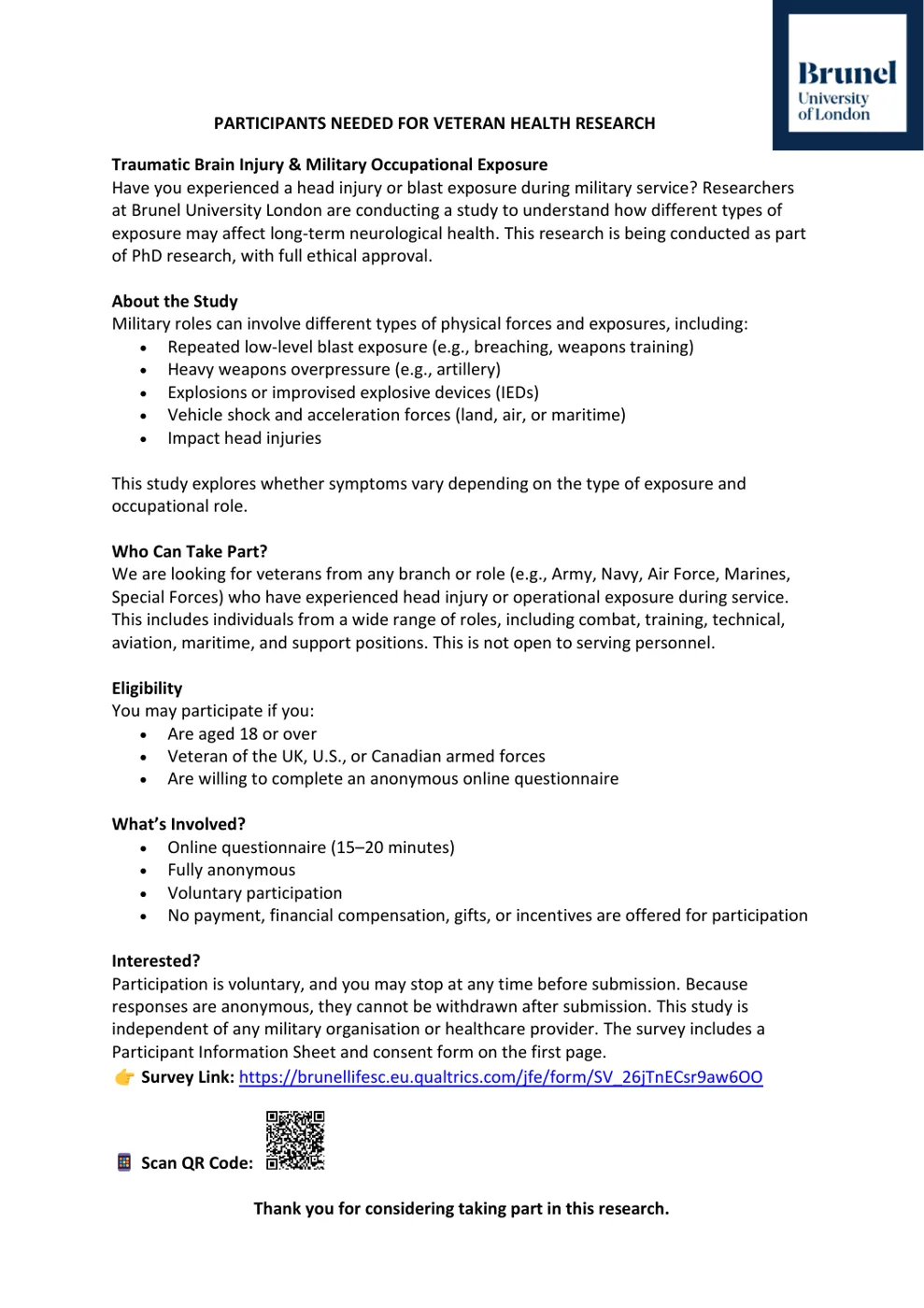
The second questionnaire asks “how different types of exposure may affect long-term neurological health”. It compares symptoms across job roles and these kinds of exposure:
- repeated low-level blast, such as breaching and weapons training
- heavy weapons overpressure, such as artillery
- explosions or improvised explosive devices
- vehicle shock and acceleration forces on land, in the air or at sea
- impact head injuries
It covers “a wide range of roles, including combat, training, technical, aviation, maritime, and support positions”. The same age and service rules apply.
Start the head injury and blast survey
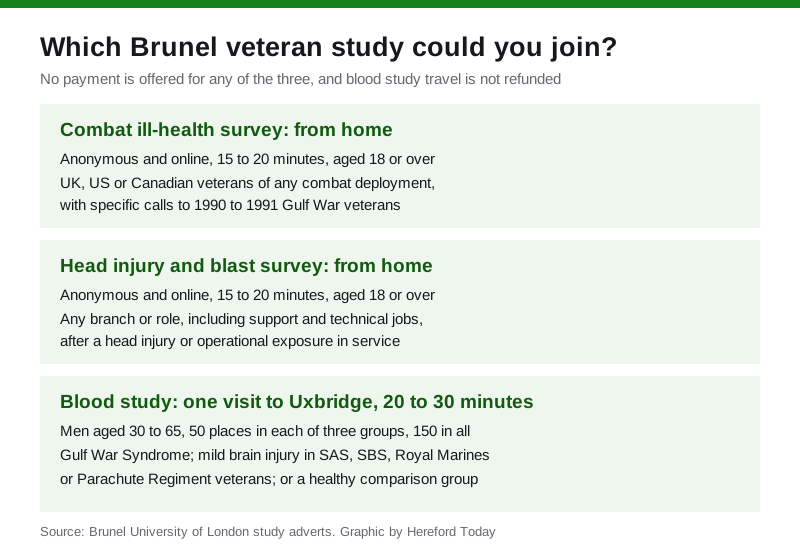
Both surveys are anonymous, and each opens with an information sheet and a consent form. You can stop at any time before you submit. Answers cannot be withdrawn afterwards, because they carry no name. No payment, gifts or incentives are offered, and the adverts say the study “is independent of any military organisation or healthcare provider”.
Both links were working when we checked them on 5 November. The adverts give no closing date.
The blood study in Uxbridge
The laboratory work is UK only and looks at what Thompson calls neuroimmune dysfunction. “The underlying biology of these health issues is not well understood, and many veterans have expressed frustration at the lack of clear explanations,” its advert says.
It wants 50 men aged 30 to 65 in each of three groups:
- Gulf War (1990 to 1991) veterans diagnosed with recognised Gulf War Syndrome
- SAS, SBS, Royal Marines or Parachute Regiment veterans with diagnosed or suspected military-related mild traumatic brain injury
- veterans with a deployment history and no Gulf War Syndrome, brain injury or other immune-altering health concern
One visit of 20 to 30 minutes covers the information sheet and consent form, a brief symptom questionnaire and a routine blood sample. There are no follow-up visits.
You would be asked to avoid alcohol for 48 hours, smoking or vaping for 12 hours and strenuous exercise for 24 hours beforehand. Some medicines and recent illnesses may affect whether you can take part.
“You will not be asked to discuss operational experiences or traumatic events,” the advert says. It also says the study “does not diagnose any condition and will not identify the cause of individual symptoms”. The project is independent of the MOD, the NHS and service charities, and taking part or not “will not affect medical care, service records, benefits, or relationships with any organisation”.
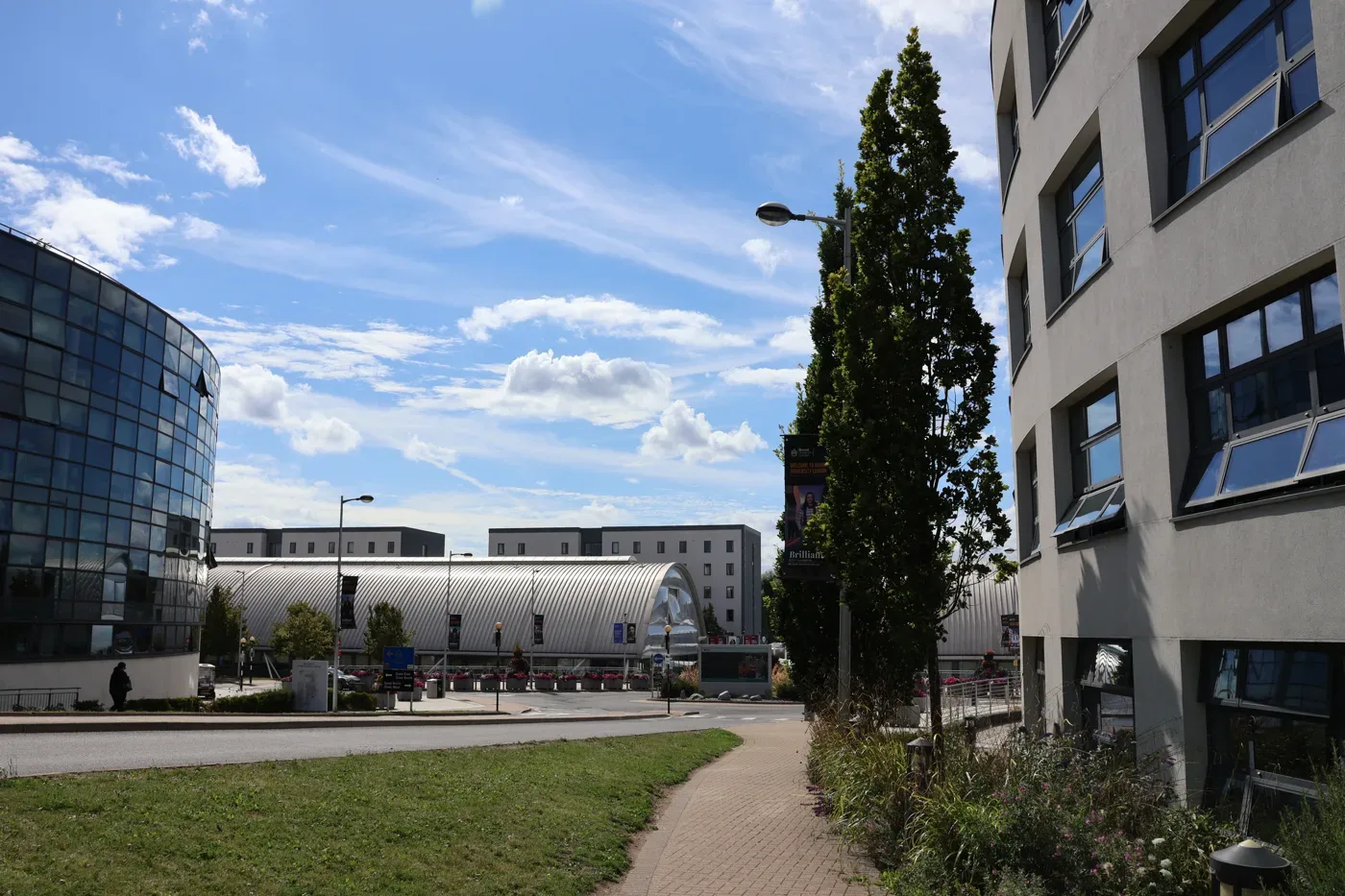
The catch for this county is the journey. Brunel’s address is Kingston Lane, Uxbridge, and the trip is further by road than the 100 miles on the map. “As the research is self-proposed and self-funded, I unfortunately don’t have the means to reimburse travel so this likely only useful to local areas,” Thompson told us.
To ask about the blood study, email 2404974@brunel.ac.uk. You will get the full information sheet before you decide. Thompson offers to talk the research through on most days, though not on Friday mornings, which go to volunteering at the coffee morning of a veteran care home.
What it means for you
If you have left the UK forces, the surveys are the easy way in from Herefordshire, on a phone or a computer. The combat survey wants people with ongoing symptoms, and neither survey asks for a diagnosis first.
If you know a veteran who would not see this, the adverts can be printed or forwarded. Hereford’s Remembrance Sunday is on 8 November.
Have your say