
Band D in Hereford city is £2,556.44 for 2026/27. The full A to H table, the £229.58 gap between parishes, and why the city's own precept jumped 14 per cent.
A band D home in Hereford city pays £2,556.44 in council tax in 2026/27. A band A home pays £1,704.29 and a band H home pays £5,112.88.
Almost all of that is the same wherever you live in Herefordshire. The county is a unitary authority, so there is no separate county charge: your bill is Herefordshire Council, the police, the fire service and, in most places, a parish or town council. Only the last one varies, and this year it varies by £229.58 at band D.
Herefordshire put its own share up by 4.99%, the most it could charge without a referendum.
The full band A to H table for Hereford city, 2026/27
| Band | Property value in 1991 | Hereford city total |
|---|---|---|
| A | Up to £40,000 | £1,704.29 |
| B | £40,001 to £52,000 | £1,988.34 |
| C | £52,001 to £68,000 | £2,272.39 |
| D | £68,001 to £88,000 | £2,556.44 |
| E | £88,001 to £120,000 | £3,124.54 |
| F | £120,001 to £160,000 | £3,692.63 |
| G | £160,001 to £320,000 | £4,260.73 |
| H | Over £320,000 | £5,112.88 |
Source: Herefordshire Council’s council tax for each valuation band and parish table, which lists all 137 parishes. Bands are based on what a property was worth in 1991, not today. These figures include the police and fire precepts and Hereford City Council’s precept.
The four parts of the bill
Herefordshire Council collects for three other bodies as well as itself. This is the county-wide breakdown at band D, from the council’s how your council tax bill is calculated page.
| Authority | 2025/26 | 2026/27 | Change |
|---|---|---|---|
| Herefordshire Council | £1,969.36 | £2,067.63 | 4.99% |
| West Mercia Police | £291.50 | £306.50 | 5.15% |
| Hereford and Worcester Fire and Rescue | £102.22 | £107.22 | 4.89% |
| Parish and town councils, average | £86.09 | £93.02 | 8.00% |
| Average total | £2,449.17 | £2,574.37 | 5.11% |
The parish tier is the smallest slice and the fastest rising. It went up 8% on average, against 4.99% for the council itself, because parish precepts are not capped by the referendum rules that hold the principal authorities down.
Two smaller items sit outside the table. Herefordshire also collects £250,000 for the Environment Agency and two internal drainage boards, the River Lugg IDB and the Lower Severn IDB. That works out at £3.36 per band D property, down slightly from £3.39.
Where you live changes the bill by up to £229.58
Three parish meetings raise no precept at all: Dinmore, Hampton Charles and Stoke Edith. Their band D bill is £2,481.35, which is the bare Herefordshire, police and fire total. Everywhere else adds its parish on top.
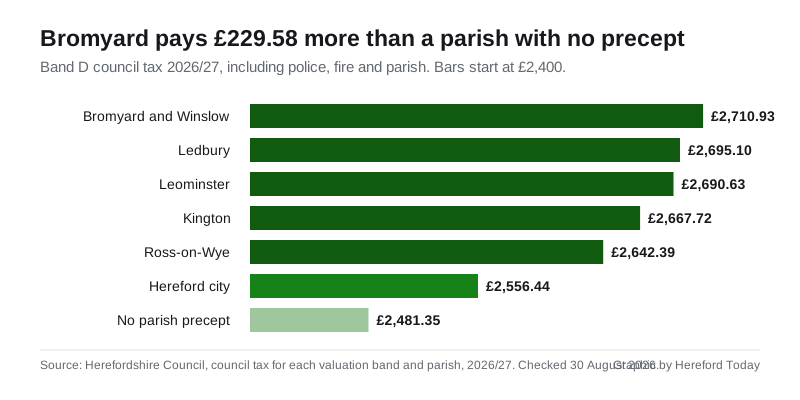
Bromyard and Winslow is the most expensive place in Herefordshire to pay council tax, at £2,710.93 at band D. That is £229.58 more than the parishes with no precept, and £154.49 more than Hereford city. Below Bromyard come Ledbury, Leominster, Ewyas Harold and Kington.
Hereford city sits well below every other town. Its parish element is £75.09 at band D, against £229.58 in Bromyard and £213.75 in Ledbury.
The parish rises: Hereford city up 14%, Kington up 28%
The council publishes budget detail for every parish spending over £140,000. Comparing the two years gives the real increases.
| Town or city council | 2025/26 | 2026/27 | Increase |
|---|---|---|---|
| Kington | £145.24 | £186.37 | 28.3% |
| Hereford City | £65.78 | £75.09 | 14.2% |
| Bromyard and Winslow | £204.69 | £229.58 | 12.2% |
| Ross-on-Wye | £149.11 | £161.04 | 8.0% |
| Ledbury | £198.71 | £213.75 | 7.6% |
| Leominster | £199.98 | £209.28 | 4.7% |
The published budgets show where the money went.
- Hereford City Council’s administration line nearly doubled, from £369,209 to £689,465. Its total expenditure rose from £1,240,734 to £1,467,756, and it is putting £160,406 into reserves against £84,743 last year. City costs and the Tourist Information Centre both shrank.
- Kington Town Council raised its precept from £134,000 to £173,000, and has set aside £35,000 for asset transfer and legal costs.
- Bromyard and Winslow raised its precept by £44,230 while cutting the amount drawn from balances from £54,979 to £23,000. Roughly half its rise is the end of a reserves subsidy rather than new spending.
The percentages above are worked out from the council’s published band D charge for each of the two years.
Where the money goes
Herefordshire Council has a gross budget of around £500 million for 2026/27. Council tax supplies £153.7 million of it. The other £346.3 million comes from business rates, government grants, reserves and charges for services.
The council’s own summary of what that buys, for a population of nearly 200,000:
- over 2,000 miles of roads
- more than 89,000 residential bin collections
- safeguarding around 1,000 children, 400 of them in care
- care and support for about 2,500 vulnerable adults
Check your band, and challenge it
Bands are set by the Valuation Office Agency, not the council. Check yours free on GOV.UK, or through the council’s own band search.
You can challenge a band if physical changes in the area have altered the property’s value, if the VOA has changed your band, or within six months of becoming the person liable for the property. An appeal against a new property’s banding must reach the VOA within three months of its decision.
Two things Herefordshire warns about on its banding page:
- Keep paying while you appeal. Stopping triggers recovery action, and an overpayment is refunded if you win.
- Banding a new property can take up to 12 weeks, and you will then get a backdated bill. The council suggests paying something on account in the meantime.
An extension does not move your band while you own the house. It is reconsidered when you sell, and the buyer picks up any change.
Discounts and reductions
Single person discount is 25%. The council explains the logic on its how discounts work page: half the bill is for the property, half is for two adults, so one adult removes a quarter.
Students are disregarded rather than exempt, which produces results people do not expect:
- One student living alone pays nothing.
- Two people, one a student: 25% off.
- Three people, one a student: no discount at all.
- Three people, two students: 25% off.
- Three students: nothing to pay.
Council Tax Reduction can cover the whole bill. Herefordshire’s working-age scheme goes up to 100%, which is more generous than many councils. The cut-off is savings and capital: no reduction at all above £6,000 for working-age claimants, or £16,000 at pension age. Universal Credit does not help with council tax, so a separate claim is needed. Details are on the Council Tax Reduction page.
Empty homes and second homes pay up to four times the bill
Herefordshire runs one of the steeper empty property escalators in England. There is no discount at all for an empty property, and the premium climbs with the years.
| How long empty and unfurnished | Council tax payable |
|---|---|
| Up to 1 year | 100% |
| 1 to 5 years | 200% |
| 5 to 10 years | 300% |
| 10 years or more | 400% |
Second homes pay 200%. The council agreed the extra 100% premium on 9 February 2024 and applied it from 1 April 2025, after the 12 months’ notice the Levelling-up and Regeneration Act 2023 requires. A furnished property that is nobody’s main home counts as a second home, and that includes holiday lets that do not qualify for business rates and properties used for seasonal workers.
There is no discount for a house being refurbished, rewired or reroofed either. The exceptions are annexes and armed forces accommodation, plus the statutory exceptions that came in on 1 April 2025, listed on the council’s premiums page.
Have your say