
Herefordshire's 17 gritters treat about 600 miles of road, 30% of the network, usually by 7.30am. Who grits the A49, grit bin refills and the icy road number.
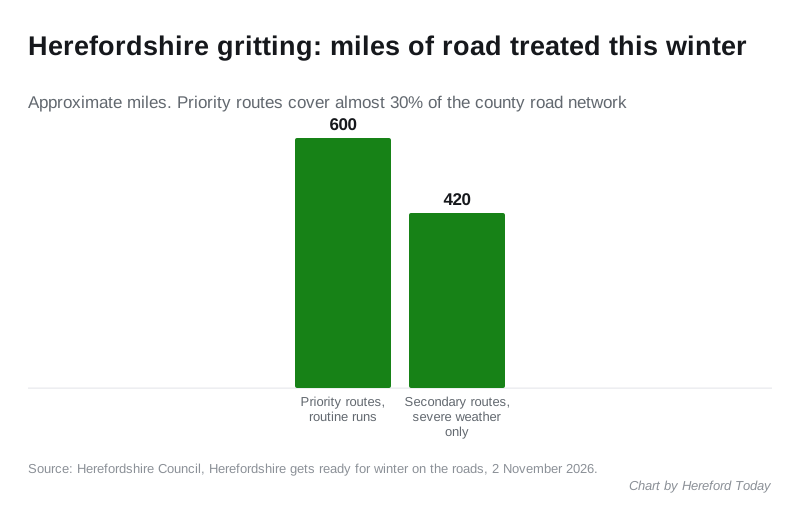
Herefordshire Council’s 17 gritters are ready for winter, with more than 6,200 tonnes of salt in stock. They treat about 600 miles of road on a routine run. That is almost 30 per cent of the county’s road network, so most lanes are never salted.
The council set out its plans in a release on Monday, after its annual dry run at the Thorn Depot in Hereford. It says the gritting season runs from 15 October to 15 April.
Which roads get gritted
The council works to two networks:
- Priority routes, about 600 miles. Main roads, key commuter routes and roads used by the emergency services. These are treated before ice is expected.
- Secondary routes, about 420 more miles. Typically roads linking smaller villages to a main road, and smaller roads on bus routes. These are treated only in prolonged cold or snow, “depending on conditions and available resources”.
Its gritting routes page says planned early morning treatments are generally finished before 7.30am. The council’s gritting routes map shows which network your road is on.
The decision to grit is reviewed three times a day. The council uses specialist forecasts and readings from seven weather stations across the county. A single run can take up to four hours from leaving the depot to getting back.
This is a bigger fleet than last winter. The council’s November 2025 release spoke of 15 frontline gritters. About 50 staff work on the winter service, with snow blowers on standby and local contractors to call on.
The A49 is not the council’s
The A49 through Hereford and Leominster, and the M50 near Ross-on-Wye, are not gritted by the council. Its winter questions page says both belong to National Highways, which you can call on 0300 123 5000.
Pavements, car parks and grit bins
- Pavements: the council grits busy footways, such as the shopping streets in Hereford and the market towns, and key footpath and cycle links. It says this is mostly in prolonged daytime frosts or heavy snow.
- Car parks: council-run car parks in Hereford and the market towns are treated when the surface is expected to stay below freezing for 24 hours.
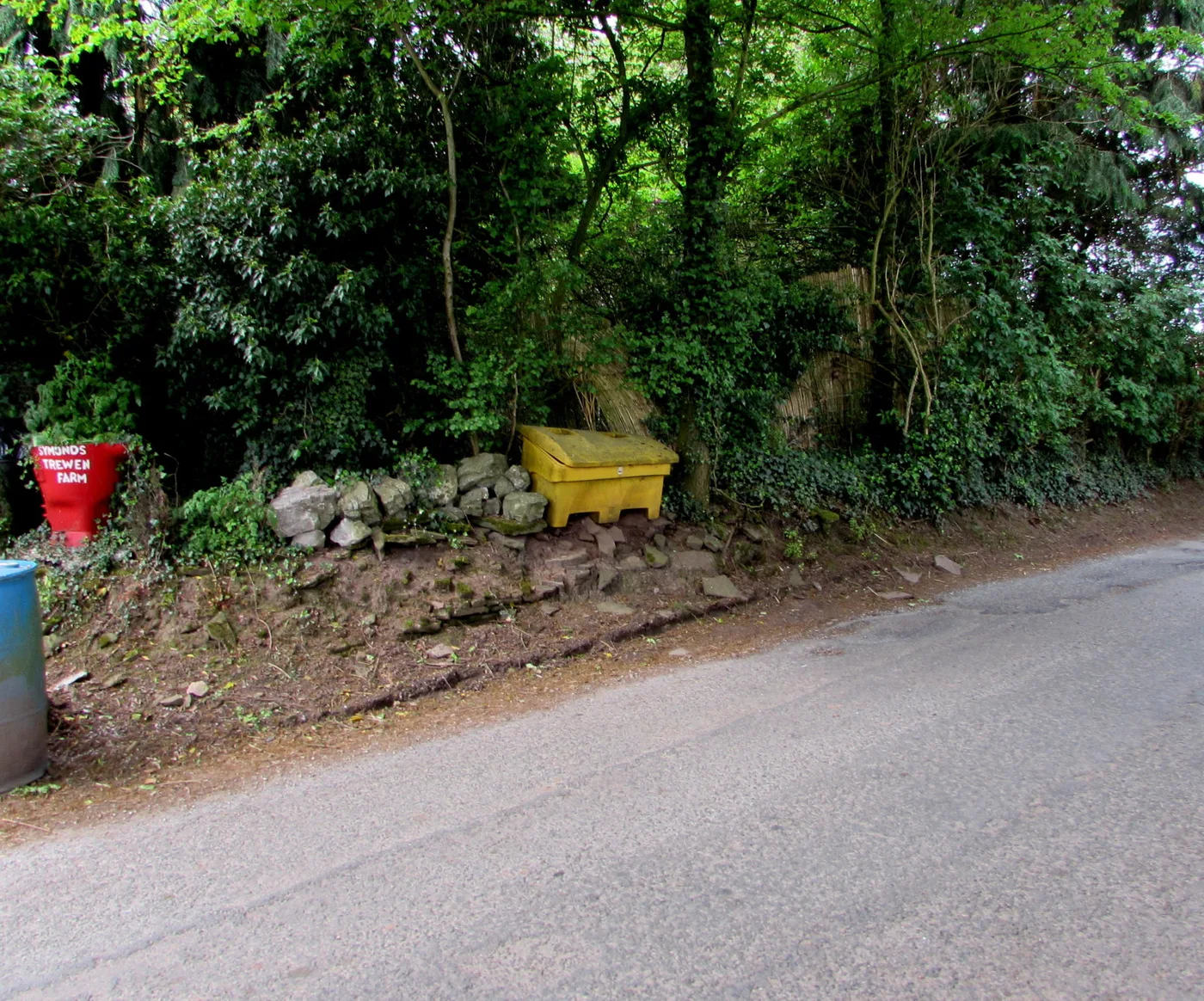
- Grit bins: the bins are filled before winter. Anyone can ask for a council grit bin to be refilled through its grit bins page. The salt is for public roads and pavements only, not driveways.
- A new grit bin: only a parish council can ask for one, and it pays for the bin, the installation and servicing. Talk to your parish clerk.
What it means for you
- To report a dangerously icy road that needs urgent gritting, call the council on 01432 261800.
- For live gritting updates, the council posts on X as @HfdsStreets, and on its Herefordshire Highways Facebook page.
- A gritted road can still be icy. The council says salt needs traffic to crush it into brine before it works, and it loses effect below about minus 5C. Quiet roads can stay icy for some time.
- You can clear the pavement outside your home. The council says it is “unlikely” you would be held responsible for an injury on a path you cleared carefully. Do not use water, which can refreeze.
Councillor Barry Durkin, cabinet member for roads, asked drivers to get their vehicles ready for winter, check the forecast and “allow extra time for your journeys”.
For current closures and roadworks across the county, see our Hereford roadworks and travel page.
Sources
- Herefordshire Council news, Herefordshire gets ready for winter on the roads, 2 November 2026
- Herefordshire Council, Winter gritting routes, Grit bins and Your questions answered about winter maintenance, read 3 November 2026
- Herefordshire Council news, Herefordshire gritters are winter-ready, 3 November 2025
Have your say